But there’s a catch. Kumar Rakesh, auto and IT analyst at BNP Paribas India, warns that a new regulation kicking in from January could take away much of this relief, at least for small bikes
“The ABS price increase can potentially wipe out some of the benefits which we are seeing,” Rakesh said, pointing out that the upcoming rule on anti-lock braking systems or ABS norms for bikes up to 125cc could offset the GST gains and hit demand in the entry segment.
ABS is a safety feature in cars and two-wheelers that prevents the wheels from locking up when you brake suddenly.
A June 2025 report from Nomura estimates the rule could reduce two-wheeler demand by 2–4%, as the added costs — about ₹2,000 for the ABS unit and another ₹1,000 for a disc brake — are likely to push retail prices up by 3–5%.
Nomura also drew parallels with earlier regulation-driven cost hikes, such as those from insurance premiums and BS-VI emission norms, which dented sales. This time, it expects the biggest impact in the entry-level segment — 100cc bikes, scooters, and mopeds — though most electric two-wheelers will also feel the pinch, except premium models like Ola S1 Pro and S1X Plus.
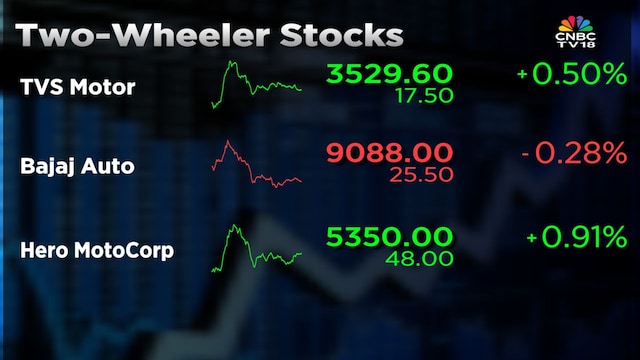
For listed players, the exposure to sub-125cc vehicles is significant: Hero MotoCorp at 79%, TVS Motor at 54%, and Bajaj Auto at 24%.
Overall, he expects the two-wheeler segment to witness healthy growth momentum over the next few quarters.
While there are some short-term uncertainties around cess refunds on unsold inventory, those should be “transient issues,” and the broader tax cut will support growth across the auto industry, Kumar added.
Read Here | Festive demand, GST cut to boost sales; two-wheeler industry may hit new peak, says SIAM
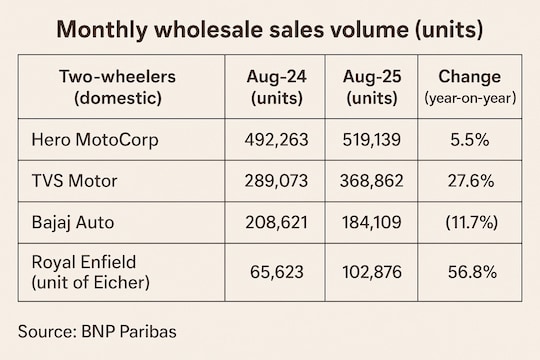
Excluding Honda, domestic two-wheeler volumes show that TVS Motor and Royal Enfield gained market share year-on-year, while Bajaj Auto and Hero MotoCorp likely ceded ground, based on BNP Paribas estimates.
Rakesh expects stress in the entry-level passenger vehicle segment to continue, as affordability for first-time buyers remains a barrier. The share of first-time buyers in the car market has declined from about 49% to 40%, reflecting weakening affordability at the lower end of the market.
For full interview, watch accompanying video
Follow our live blog for more stock market updates